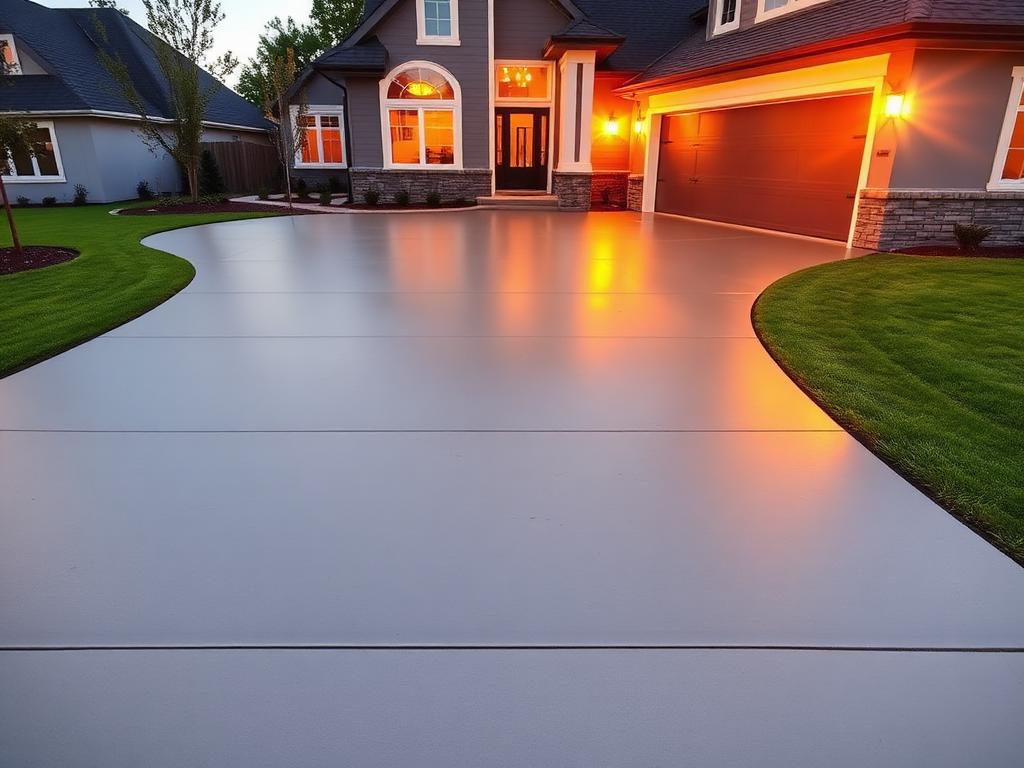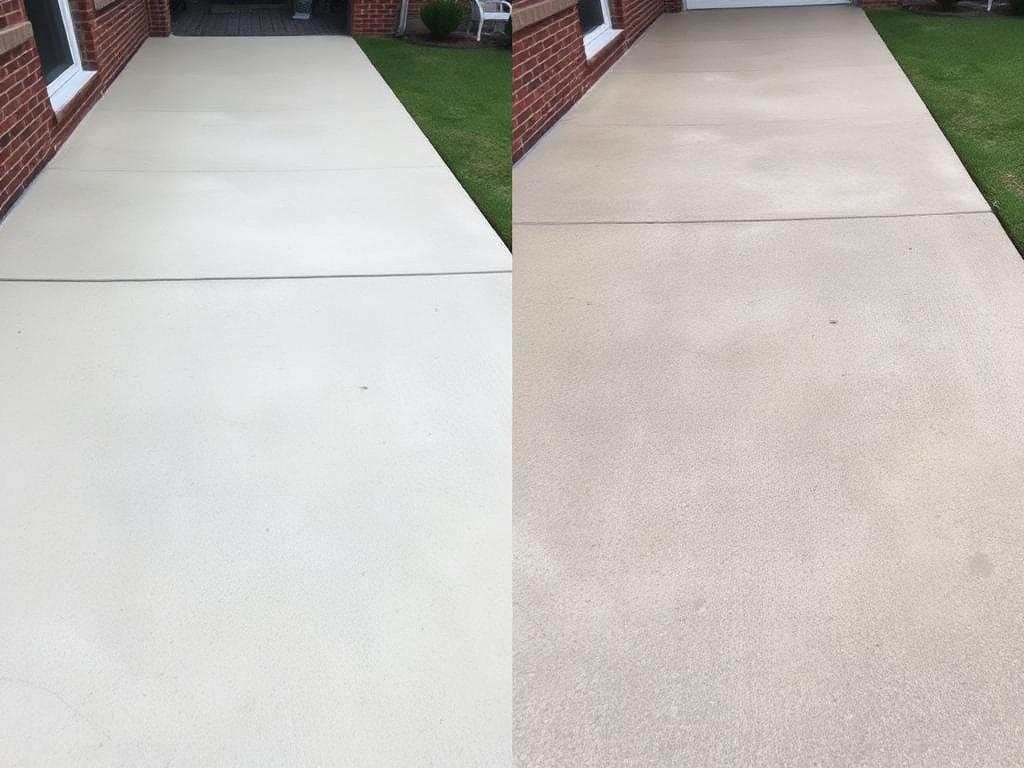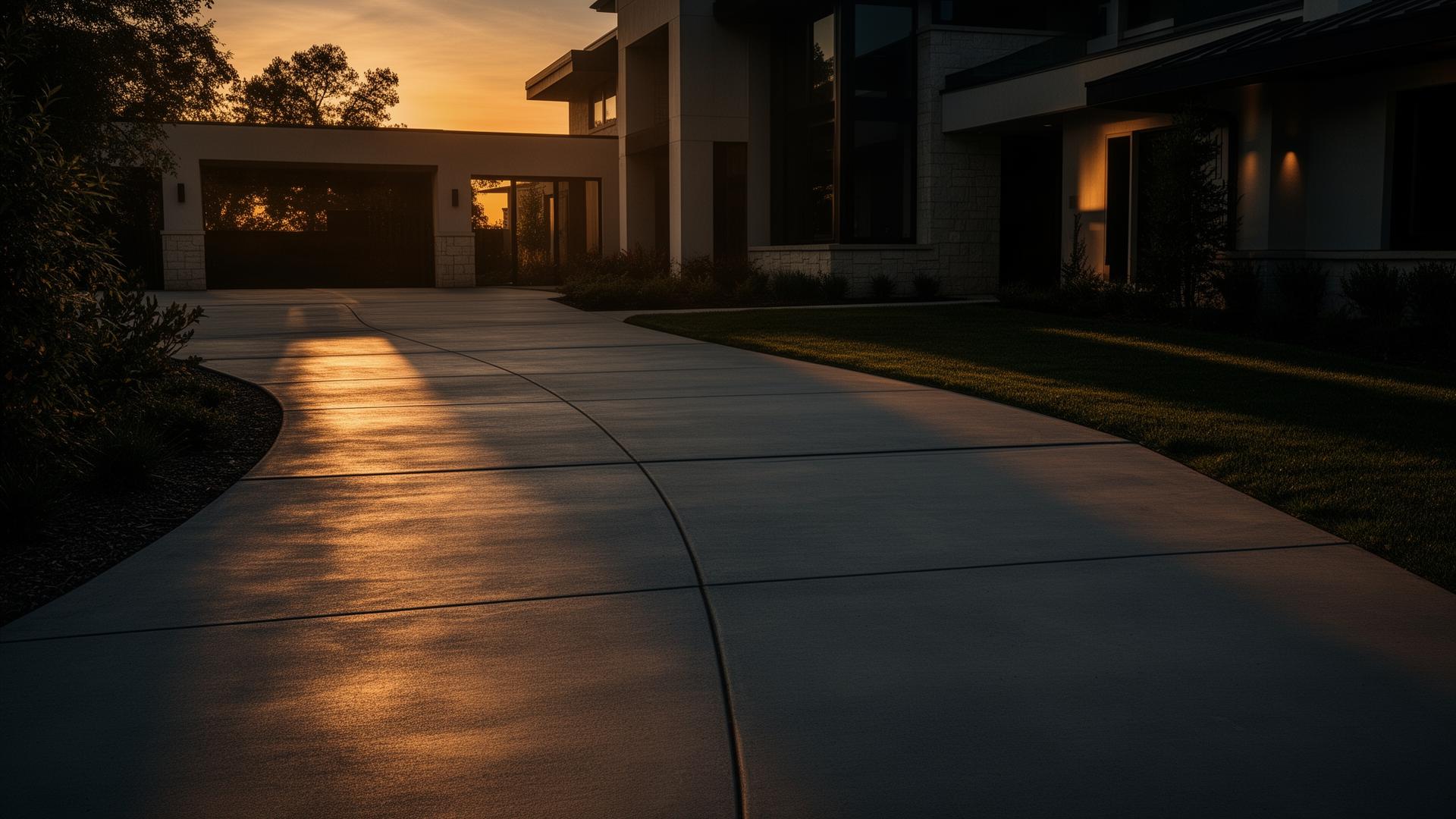
Wisconsin winters are brutal on concrete. Janesville averages 30+ freeze-thaw cycles every season, plus heavy snow, road salt tracked in by vehicles, and meltwater that constantly refreezes. The good news: a few simple habits keep your concrete looking new for decades.
1. Seal it on a schedule
Sealing is the single most important winter maintenance step. A good penetrating siloxane sealer keeps water out of the capillary pores, which is the root cause of nearly every freeze-thaw failure.
- Plain broom-finish concrete: seal every 3–5 years
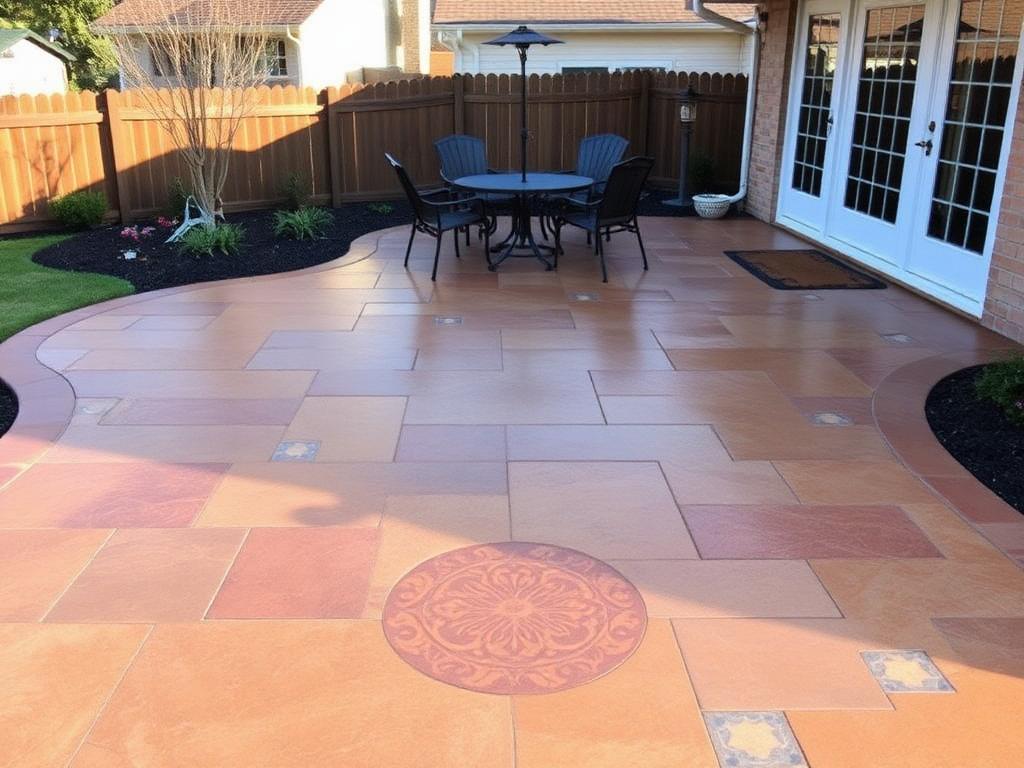
- Stamped or colored concrete: seal every 2–3 years
- Always reseal in the fall (September–October) before the freeze
We handle this on our staining & sealing service — usually a one-day job for a residential driveway.
2. Use the right de-icer (and avoid the wrong ones)
- Best: Calcium magnesium acetate (CMA) and plain sand for traction
- Use sparingly: Potassium chloride
- Avoid: Sodium chloride (rock salt), calcium chloride, magnesium chloride — especially on concrete under 1 year old
Rock salt is cheap because it's a freeze-thaw multiplier — it forces extra cycles by lowering the freezing point. That's exactly what destroys concrete surfaces.
3. Shovel and clear snow promptly
Standing snow melts during the day, runs into joints and microcracks, and refreezes overnight. The longer snow sits, the more freeze-thaw damage accumulates. Clear within 24 hours when possible.
4. Don't let water pool
Check your downspouts and grading. Water pooling on or next to a slab and freezing is the #1 reason driveways crack and settle in Janesville. If you see ice forming in the same low spot every winter, fix the drainage before fixing the concrete.
5. Treat the first winter gently
New concrete reaches full strength at 28 days but doesn't fully cure for closer to a year. For the first winter:
- Zero de-icing chemicals — only sand for traction
- Use a plastic-edged shovel
- Don't let cars drip salt-saturated meltwater on it for hours
6. Address small damage immediately
A hairline crack in October becomes a 1/4" crack by April if water gets in and freezes. Catch it early with concrete repair or a sealant top-up before the cycle starts.
Bottom line
Maintaining concrete in Wisconsin's freezing temperatures comes down to four habits: seal regularly, choose the right de-icer, clear snow fast, and fix small damage early. Stick to those and your driveway or patio will outlast every other thing on your property.
Maintenance advice from a Janesville concrete company
The most important winter maintenance habit is keeping water and salt from sitting on the slab. Sweep away slush, avoid harsh de-icers during the first winter, and re-seal exterior concrete before the surface starts absorbing water. In Janesville, where temperatures can swing above and below freezing many times in one month, those simple habits reduce spalling and surface scaling.
A good concrete quote in Janesville, WI should include care instructions after installation. New driveways, patios, and stamped concrete all need time to cure before heavy use, and decorative concrete needs a predictable sealing schedule. If a concrete company finishes the pour and never explains maintenance, you are missing part of the service.
If your concrete already absorbs water quickly, looks dusty, or has light flaking, schedule sealing or repair before winter. Preventive maintenance is far less expensive than spring resurfacing after a season of freeze-thaw damage.
For a clear next step, compare the related service details on our local concrete service page or request a no-pressure estimate from a Janesville concrete company that builds for Wisconsin weather from the base up.
Frequently Asked Questions
- How do I protect my concrete driveway in winter?
- Seal it every 3–5 years, avoid sodium chloride (rock salt), use calcium magnesium acetate (CMA) or sand for traction, shovel snow promptly, and never let melt water pool and refreeze on the slab.
- What is the safest de-icer for concrete in Wisconsin?
- Calcium magnesium acetate (CMA) is the safest commonly available de-icer for concrete. Sand provides traction without chemical damage. Avoid rock salt, calcium chloride, and magnesium chloride on concrete less than 1 year old.
- How often should I seal my concrete in Wisconsin?
- Every 3–5 years for plain broom-finish concrete, and every 2–3 years for stamped or colored concrete. Janesville's freeze-thaw cycles are aggressive, so don't stretch the interval.
- Can I use a metal snow shovel on concrete?
- Yes for established concrete, but use a plastic-edged shovel or snow blower with rubber-edge bar for the first winter so you don't gouge a freshly cured surface.
- Why is my concrete flaking after one winter?
- That's spalling, usually caused by water absorption + freeze-thaw + de-icer chemicals. It signals either a missed sealing, a poor mix without air entrainment, or rock salt damage. Get it inspected before the next winter.
Ready for an instant quote in Janesville?
Free, no-pressure estimates from a local Janesville, WI concrete crew. Most quotes returned same business day.